Error: Contact form not found.
For every Pokémon card collector, choosing the right binder layout is far more than a trivial accessory decision—it is a foundational choice that shapes daily collection management, card protection, display aesthetics, and long-term archival quality. Whether you are a casual tournament player who frequently attends offline events, a dedicated completionist chasing full set masteries, or a premium collector curating rare alternative art and vintage cards, pocket layout directly impacts portability, storage efficiency, and visual presentation. While 9-pocket and 12-pocket binders dominate the mainstream market, the niche 4-pocket layout serves as an indispensable supplementary tool for targeted card storage. This in-depth guide breaks down the strengths, use cases, and unique advantages of each layout to help collectors match their gear to their specific collecting lifestyle.
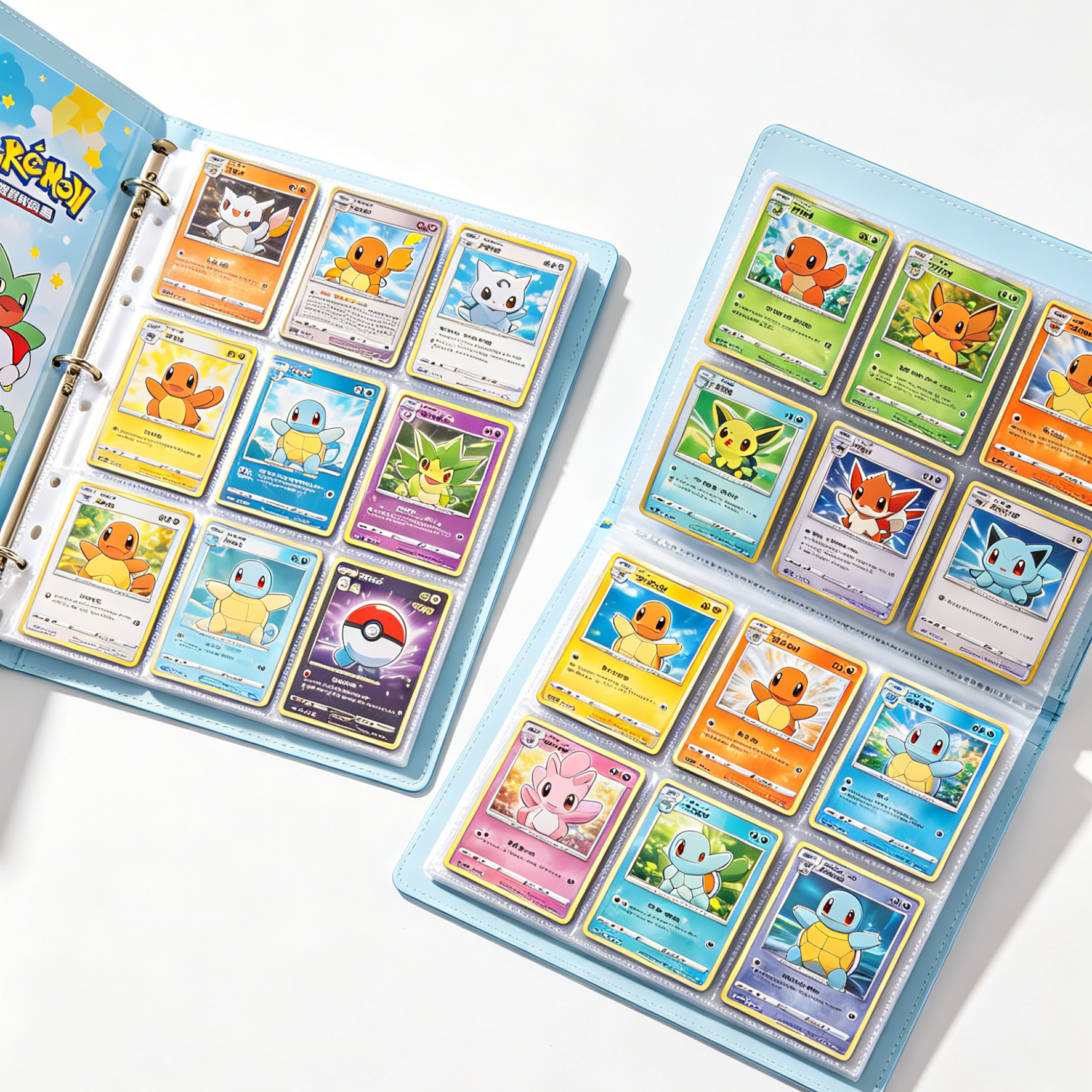
The 3x3 grid 9-pocket layout has long stood as the universal industry standard for Pokémon card binders, favored by mainstream collectors and players for its perfect balance of portability, capacity, and versatility. Designed with a classic square grid structure, this layout delivers consistent and orderly card arrangement, eliminating the cramped or scattered visual effect that plagues irregular layouts. Equipped with standard double-sided pages, a complete 9-pocket binder can hold up to 360 cards in total, which precisely aligns with the full checklist volume of nearly all official Pokémon standard expansion sets. This means collectors can store an entire completed expansion set in one single binder, realizing one-set-one-storage neatness and greatly simplifying set classification and inventory checks.
In terms of practical utility, the compact and streamlined dimensions of the 9-pocket binder bring unparalleled mobility. Unlike oversized display binders that are bulky and cumbersome, its moderate size fits perfectly into standard backpacks, tournament bags, and daily travel totes, without bending binder corners, squeezing card pages, or adding extra travel burden. The slim structure also prevents page warping and card extrusion caused by excessive internal crowding, effectively protecting card edges and surfaces during daily carrying.
For active Pokémon community participants, the 9-pocket layout is undoubtedly the most cost-effective and functional choice. Players who regularly attend local store tournaments, regional competitive events, and casual trading meetups need portable storage that is both easy to carry and capable of holding a large number of spare cards and trade reserves. The Sanseking Premium 9-Pocket Binder perfectly caters to this demand. It retains excellent full-range mobility while upgrading core structural safety features. The side-loading page design effectively prevents cards from slipping out during movement and extrusion, avoiding the common trouble of card loss caused by top-loading loose pages. With durable waterproof and scratch-resistant outer cover and acid-free inner pages, it provides comprehensive protection for cards during frequent outdoor carrying and frequent page flipping, making it the ultimate daily-use binder for active players and set completion collectors.
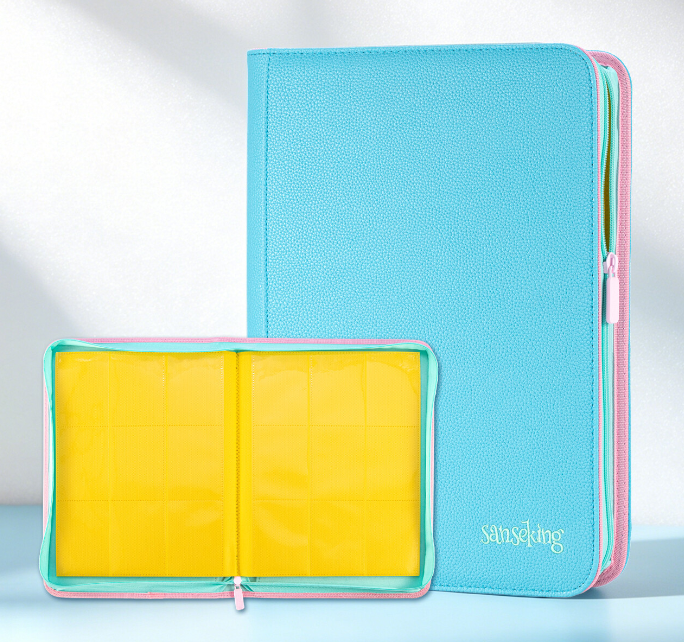
Tailored for advanced and high-end collectors who regard Pokémon cards as collectible artworks rather than simple game props, the 4x3 landscape 12-pocket layout completely subverts the traditional vertical viewing experience and redefines high-quality card display and long-term archival standards. Different from the square 9-pocket grid, its horizontal wide-screen layout expands the visual field to the greatest extent, focusing on presenting the overall beauty and detailed texture of card designs.
The core advantage of the 12-pocket layout lies in its superior panoramic display capability. A single double-sided 12-pocket page can display 24 cards on one complete horizontal plane, achieving an uninterrupted and integrated viewing effect. This layout is extremely friendly for collectors who focus on collecting evolutionary lines, theme sets, and alternative art series. Collectors can neatly arrange complete three-stage Pokémon evolutionary lines, paired with different rare variants such as full art, alternate art, and secret rare cards on the same page, without splitting the visual integrity of the set due to layout limitations. Every detail of card illustrations, background textures, and exclusive coloring can be fully displayed, perfectly restoring the artistic value of high-value rare cards.
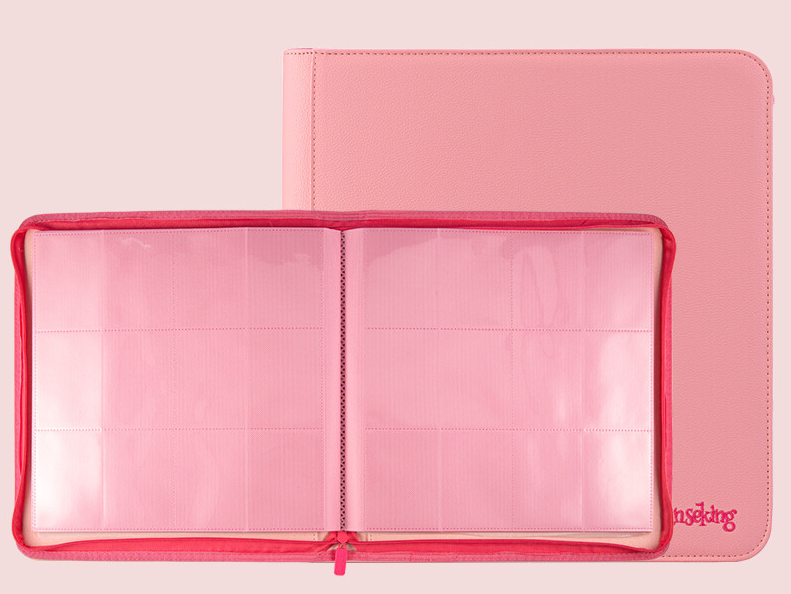
In terms of storage positioning, the 12-pocket layout abandons extreme portability in exchange for larger storage space and higher display aesthetics, making it the best choice for fixed home storage and high-end collection sorting. A full-capacity 12-pocket binder can store up to 480 cards, providing more sufficient storage space for large-size complete sets and multi-variant collections. The Sanseking Luxury 12-Pocket Card Album further optimizes the archival experience on the basis of the classic 12-pocket layout. The widened page spacing avoids card extrusion and friction, and the high-transparent matte inner pages reduce light reflection, allowing collectors to clearly appreciate the holographic effect, foil stamping details, and fine patterns of rare cards such as SAR, UR, and CSR. It is the ideal tool for building personal high-end collection libraries and long-term permanent card preservation.
Most collectors focus only on the 9-pocket and 12-pocket mainstream layouts, yet the compact 2x2 4-pocket layout fills a key gap in refined card storage and high-value card protection. This layout deliberately reduces total storage capacity to achieve ultra-high structural rigidity and access efficiency, serving as a professional auxiliary storage tool for scenario-based collection needs.
The core positioning of the 4-pocket layout is micro-precision storage and safety protection. With a total capacity of only 160 cards, it is not designed for large-scale set storage, but excels at classified isolation and anti-collision protection of high-value core cards. For players who often conduct offline card trading, it is the perfect carrier for storing "trade bait"—high-value duplicate cards used for trading. It can independently store precious tradable cards, avoiding mixing with ordinary bulk cards and preventing accidental loss or damage during trading screening. Meanwhile, competitive players can use it to store exclusive tournament deck core cards, isolating key deck components from the main collection to prevent confusion, loss, or accidental wear during carrying.
In terms of safety performance, the compact 2x2 grid structure makes the binder more rigid and pressure-resistant than large-size layouts. The tightly arranged pockets fix cards more stably, effectively resisting external extrusion, vibration, and minor impacts during outdoor carrying. It can perfectly protect high-value single cards from damage caused by backpack spills, extrusion, or friction with sundries. Lightweight and portable enough to be held in one hand or placed in a small shoulder bag, the 4-pocket travel binder allows collectors to carry their most valuable core cards at all times, achieving convenient access and all-round safety protection.
| Feature Metric | 4-Pocket Layout | 9-Pocket Layout | 12-Pocket Layout |
|---|---|---|---|
| Primary Use-Case | Event Trading / Tournament Deck Storage / High-Value Card Isolation | Set Completion / Daily Travel / Universal Collection | Master Archival / Home Display / High-End Set Curation |
| Average Capacity | 160 Cards | 360 Cards | 480 Cards |
| Visual Orientation | 2x2 Compact Grid (Focus on Safety) | 3x3 Classic Grid (Balanced Practicality) | 4x3 Panoramic Grid (Focus on Aesthetics) |
| Portability Score | Ultra-High (Pocketable, Lightweight) | High (Fits Standard Travel Bags) | Medium (Suitable for Desks/Large Bags) |
Ultimately, the perfect binder layout is not a one-size-fits-all standard, but a personalized choice that matches your collecting habits and lifestyle. Active players who pursue mobility and daily practicality should prioritize the classic 9-pocket layout to balance storage volume and portability. Collectors who focus on long-term collection preservation and high-end visual display will find the wide-screen 12-pocket layout ideal for showcasing the full charm of master sets and rare cards. Meanwhile, the portable 4-pocket layout is a must-have accessory for protecting high-value trading cards and tournament deck cards. Regardless of the layout you choose, always prioritize binders with acid-free page construction and premium textured backing to avoid card oxidation, fading, and scratching, ensuring long-term preservation of your precious collection.
Find your ideal storage format: Discover our complete catalog of Premium 4, 9, and 12-Pocket Card Binders to upgrade your tabletop setup and optimize your Pokémon card collection management system.